

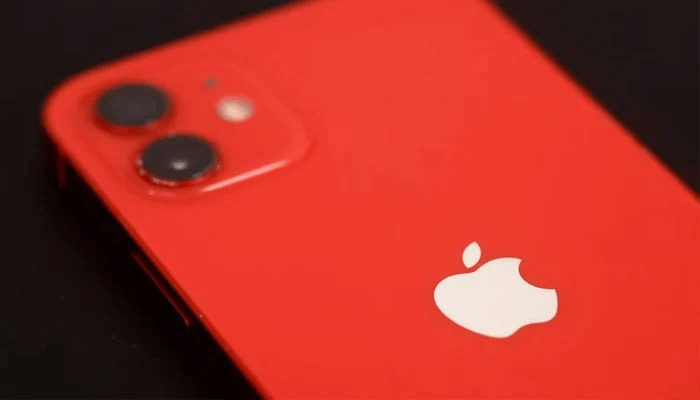
The French government announced on Wednesday that it will temporarily halt the sales of Apple’s iPhone 12 within the country.
This decision comes as a response to growing concerns about the device emitting excessive electromagnetic radiation.
The French regulatory authority responsible for monitoring radio frequencies, ANFR (Agence Nationale des Fréquences), has also urged Apple to take immediate action to rectify the radiation issue in existing iPhones. This development has ignited a contentious dispute between the tech giant and French authorities.
ANFR has communicated to Apple that if a software update fails to resolve the radiation problem, the company will be obligated to recall all iPhone 12 units ever sold in France. It’s worth noting that the iPhone 12, initially launched in September 2020, remains available for purchase in other parts of the world.
In response, Apple has vehemently contested ANFR’s findings and asserts that it has provided the regulator with comprehensive laboratory results from both its internal research and third-party sources. These results purportedly demonstrate that the iPhone 12 complies with the relevant radiation regulations. The company maintains that the iPhone 12 meets radiation-level requirements in multiple jurisdictions globally.
The World Health Organization (WHO) has previously attempted to address concerns regarding the radiation emitted by mobile phones. On its official website, WHO emphasizes that there is no scientific evidence suggesting that low-level electromagnetic fields from phones pose any harm to humans.
France’s digital minister, Jean-Noel Barrot, revealed that the decision to suspend iPhone 12 sales in France stemmed from radiation levels that exceeded acceptable thresholds, particularly in relation to the Specific Absorption Rate (SAR).
The SAR is a metric that measures the rate at which the human body absorbs electromagnetic energy when using a mobile device. For close-contact situations, such as holding the phone or carrying it in a pocket, the SAR limit is set at four watts per kilogram. The ANFR’s investigation found that the iPhone 12’s SAR in such scenarios exceeded this limit, registering at 5.74 watts per kilogram.
Barrot emphasized that Apple has a two-week window to respond to ANFR’s findings. Should the company fail to adequately address these concerns, France is prepared to initiate a recall of all iPhone 12 devices currently in circulation. It’s worth noting that this rule applies universally, including to tech giants like Apple.
France intends to share its findings with regulatory bodies throughout the European Union, potentially triggering a ripple effect of actions against the iPhone 12 within the trading bloc.
In an interesting twist of timing, Apple unveiled its new iPhone 15 on the same day news broke about the iPhone 12’s sales suspension in France. The iPhone 15 introduces a new charging port, departing from previous models, and Apple plans to offer adapters to allow users to continue using their existing cables.
In a separate development, the Chinese foreign ministry has refuted media reports suggesting that government agencies instructed their staff to stop using iPhones. China clarified that it has not enacted any laws, regulations, or policies that prohibit the use of Apple’s products.

